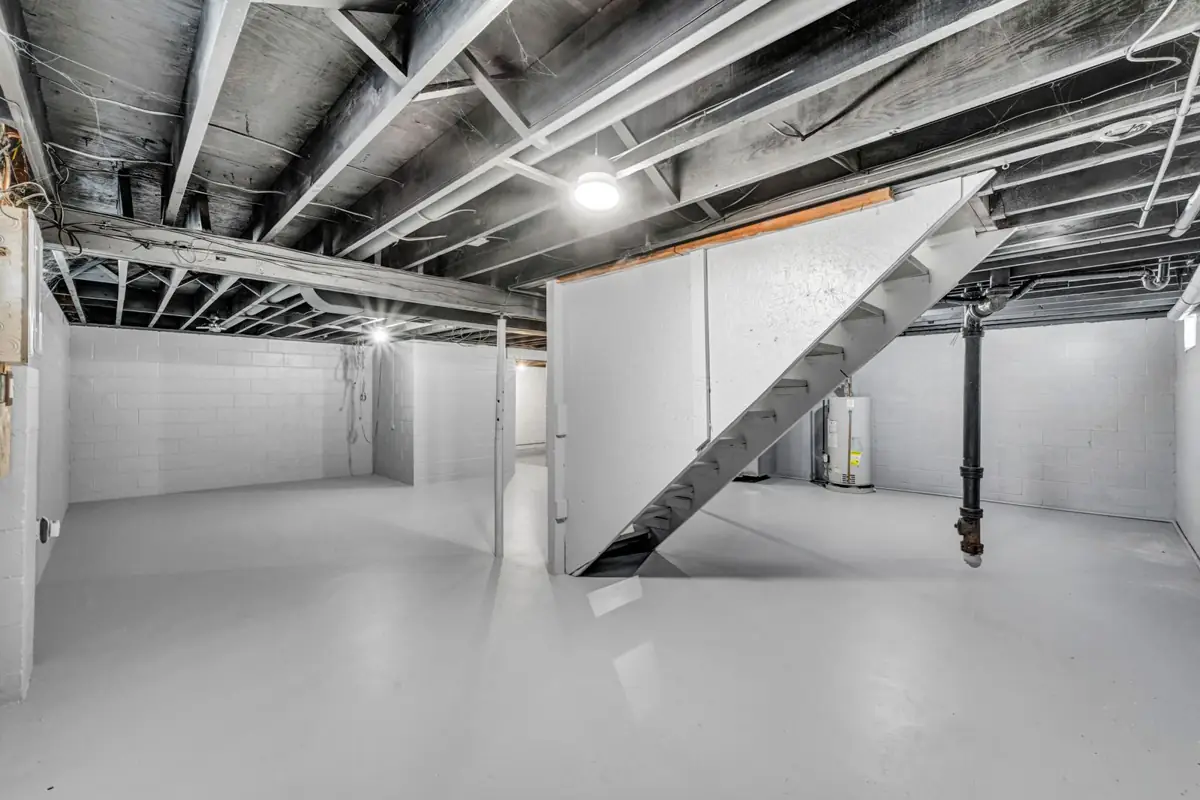
A basement can feel damp and smell musty even when there is never a puddle on the floor. Moisture moves through concrete, evaporates from bare walls, condenses on cool surfaces and rises from the soil below. In the Mahoning Valley, humid summers and long, wet springs give basements plenty of moisture to work with. Left unchecked, that moisture supports mold, mildew, dust mites and wood decay, and it can affect air quality in the rest of the house.
Where basement moisture comes from
Liquid water enters through cracks, the cove joint, block walls and window wells. This is the most obvious source and is handled with drainage, crack repair or exterior work.
Capillary moisture wicks through concrete from damp soil even without visible leaks. Concrete is porous, and in clay soils that stay wet, walls and slabs can carry a steady flow of moisture to the inside surface.
Condensation forms when warm, humid summer air meets cool basement walls, cold water pipes and ducts. Many people are surprised that opening basement windows in July often makes humidity worse.
Interior sources such as clothes dryers that are not vented outside, line-dried laundry, aquariums, showers and leaking plumbing all add moisture.
Signs of a moisture problem
- A persistent musty or earthy smell.
- Visible mold or mildew on walls, wood, stored boxes or the backs of furniture.
- Efflorescence, a white powdery deposit on concrete or block.
- Condensation on cold water pipes, ducts or the tank of a toilet.
- Peeling paint, bubbling wall coatings or rust on metal shelving.
- Indoor relative humidity readings that stay above about 60 percent.
An inexpensive hygrometer from a hardware store is a good first tool. Many building scientists recommend keeping basement humidity below 60 percent, and closer to 50 percent in summer, to limit mold growth.
A step-by-step approach
1. Find and stop liquid water first. No dehumidifier can keep up with a wall that leaks every time it rains. Check gutters, downspout extensions and grading, then address seepage with the appropriate fix, such as interior drainage, crack repair or exterior waterproofing.
2. Reduce condensation. Insulate cold water pipes, keep basement windows closed during humid weather, and make sure the dryer vents outdoors. Sealing a sump basin with an airtight lid also limits evaporation from the pit.
3. Dehumidify. A properly sized dehumidifier with a continuous drain to a floor drain or the sump keeps humidity in check without emptying buckets. Whole-house or high-capacity basement units move more air and handle larger spaces better than small portable models.
4. Improve air movement. Keep stored items off the floor and a few inches from walls. Plastic bins on shelves are better than cardboard boxes on concrete.
5. Choose basement-appropriate materials. If finishing a basement, use materials that tolerate occasional moisture and avoid trapping moisture behind vapor-tight layers on cold walls without a plan.
When mold needs professional attention
The U.S. EPA notes that a homeowner can often clean small areas of mold on hard surfaces, roughly under ten square feet, with detergent and water while wearing gloves and eye protection. Larger areas, mold in HVAC systems, mold after sewage backups, or anyone in the household with health concerns are reasons to involve a professional. Porous materials like drywall, carpet and ceiling tile that are heavily affected usually need to be removed rather than cleaned. Mold returns unless the moisture source is fixed, which is why moisture control and waterproofing go together.
Radon and basements
Radon is a colorless, odorless gas that enters homes through foundations. The U.S. EPA and the Ohio Department of Health recommend testing, and testing is especially sensible before finishing a basement. Sealing cracks and installing a sealed sump lid can be part of a broader radon plan.
Questions to ask a specialist
- Is the moisture coming from liquid water, capillary wicking, condensation or a mix?
- Is a dehumidifier enough, or is drainage needed first?
- What capacity dehumidifier fits the space, and where will it drain?
- Are there materials that should be removed because of mold?
- Should the basement be tested for radon before or after work?
Cost factors
The scope can range from a dehumidifier and minor sealing to drainage, wall treatment, material removal and mold remediation. Size of the space, extent of mold, finished surfaces and the underlying water source all drive cost. The cost factors guide covers the main variables.
Seasonal patterns in the valley
Basement moisture in the Mahoning Valley follows the calendar. Late winter and spring bring snowmelt and rain that saturate the clay soils, which is when seepage and capillary moisture peak. Summer brings humid air, and condensation on cool basement walls and pipes becomes the main source. Fall is often the driest stretch, which makes it a good time to plan repairs, clean and treat surfaces, and set up a dehumidifier before the next wet season. Tracking humidity with a hygrometer through a full year helps show which problem matters most in your basement.
Before finishing a basement
If you are planning to finish a basement, address moisture first. Confirm the space stays dry through a full spring, test for radon, plan for a dehumidifier and choose wall and floor systems suited to below-grade spaces. Fixing water problems after drywall and carpet go in is far more disruptive than fixing them first.
Connect with a local specialist
If your basement smells musty or shows signs of mold, call to connect with an independent basement moisture specialist serving Boardman, Canfield, Austintown, Warren, Niles and the rest of the Mahoning Valley.
Frequently asked questions
What humidity level should a basement have?
Many guidelines suggest keeping indoor humidity below 60 percent, and ideally closer to 50 percent in summer, to limit mold and dust mites.
Will a dehumidifier fix a wet basement?
A dehumidifier controls moisture in the air. It cannot keep up with liquid water leaking through walls or floors, which needs to be stopped first.
Can I clean basement mold myself?
The U.S. EPA suggests small areas on hard surfaces can often be cleaned by a homeowner with proper precautions. Larger or recurring growth calls for professional help.
Why does my basement smell musty with no visible water?
Capillary moisture through concrete, condensation and high humidity can all cause musty odors even without leaks.