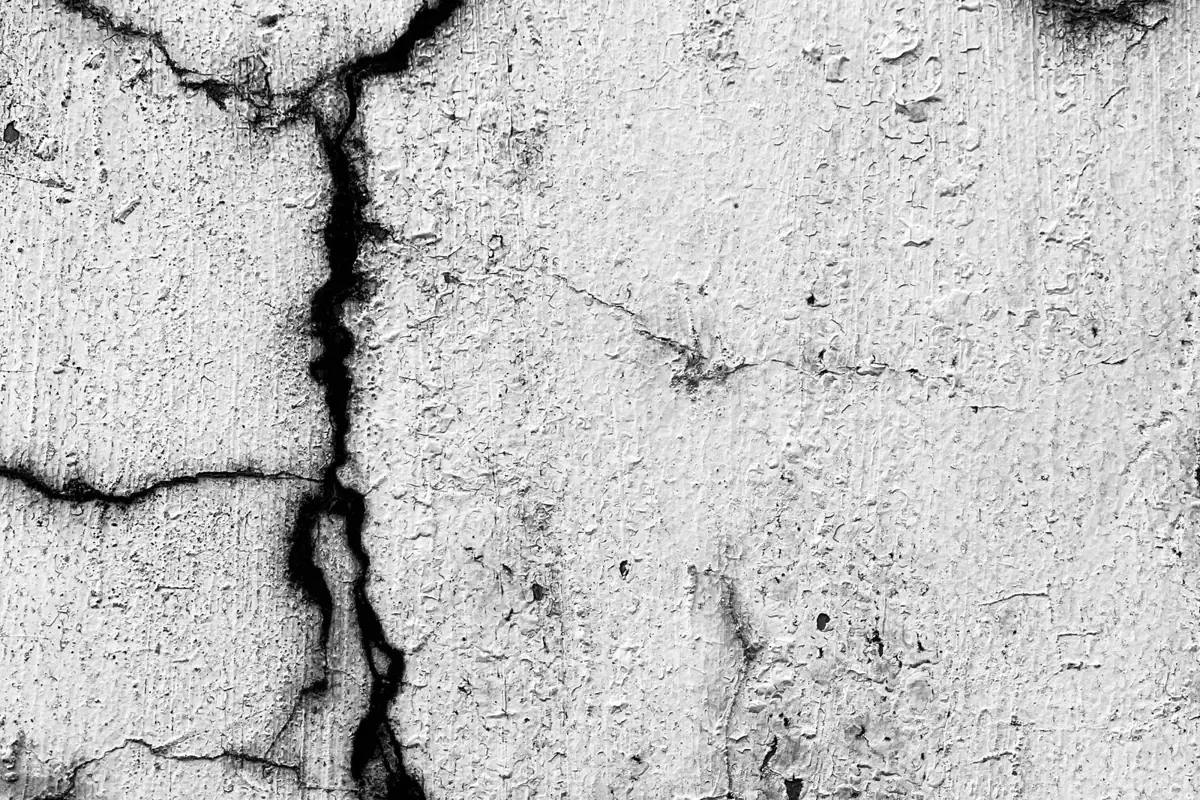
Almost every poured concrete basement develops a few cracks. Concrete shrinks as it cures, and foundations settle slightly in their first years. Many of those cracks never cause trouble. Others become a path for water every spring, and a smaller number point to soil pressure or movement that needs a closer look. Knowing the difference helps you decide what kind of help to call for.
Common types of basement cracks
Vertical shrinkage cracks are the most common. They run straight up and down or at a slight angle, are often hairline to a sixteenth of an inch wide, and appear in poured walls within the first years after construction. Their main risk is water.
Diagonal cracks, especially those that run from the corner of a window or widen toward one end, can indicate differential settlement where one part of the foundation has moved more than another.
Horizontal cracks in block or poured walls, often a few feet below grade, can be caused by soil pressure pushing inward. Clay soils that swell when wet and frost pressure near the surface both contribute. A horizontal crack, a wall that bows inward, or a stair-step crack in block mortar should be evaluated rather than simply sealed.
Floor cracks in the slab are usually from shrinkage. They can let water in when groundwater is high, but they rarely relate to wall structure.
Why cracks leak more in the Mahoning Valley
Soils across Mahoning and Trumbull counties are often slow-draining glacial till. When snow melts quickly in March or heavy rain falls in spring, water collects against the foundation and is pushed through any weakness. Frost cycles also matter. Water in a crack expands as it turns to ice, and repeated cycles can widen a hairline crack over time. A crack that stayed dry for years can start leaking after a hard winter.
How leaking cracks are typically repaired
Injection repair is the most common approach for poured concrete walls. A specialist cleans the crack surface, seals it with a paste, and installs small ports along its length. A liquid material is then injected under pressure to fill the crack through the full thickness of the wall.
- Polyurethane foams on contact with water and stays flexible. It is often used for actively leaking cracks and walls that may move slightly with seasons.
- Epoxy cures into a rigid bond and is sometimes chosen when restoring structural continuity in a crack that is not moving.
The right material depends on whether the crack is wet, how wide it is, and whether movement is suspected.
Exterior crack sealing involves digging down outside at the crack and applying a membrane or sealant to the outside face of the wall. It is more disruptive but can be appropriate where access inside is blocked or the wall needs exterior attention anyway.
Block wall cracks behave differently. Hollow concrete block is not a solid mass, so injecting a single crack is often ineffective. Water usually travels through the hollow cores, and block walls are commonly addressed with interior drainage or exterior waterproofing instead.
When a crack may be structural
Seal a crack only after understanding why it is there. Consider a structural evaluation if you notice:
- Horizontal cracks, or stair-step cracks in block mortar joints.
- A wall that leans or bows inward, even slightly.
- Cracks wider at one end than the other, or offsets where one side of the crack sits farther out.
- Doors or windows upstairs that have started sticking, or new drywall cracks.
- Cracks that keep growing after being marked and measured over a few months.
Wall reinforcement methods include carbon fiber straps, steel beams and wall anchors. Those decisions belong with a qualified foundation specialist or structural engineer after an inspection.
Simple ways to monitor a crack
Mark the ends of the crack with a pencil and the date. Measure the width at a few points with a ruler or crack gauge. Take photos with a coin or tape measure for scale. Check again after a heavy rain and after winter. This record helps any specialist understand whether the crack is stable, and helps you explain the history during a call.
Do-it-yourself crack fillers
Hardware store sealants and hydraulic cement can slow a minor leak, but surface patches often fail because they do not fill the crack through the wall and cannot bond well to damp concrete. If a patch keeps failing, the water pressure behind it is likely higher than a surface product can handle.
Questions to ask
- Is this crack likely shrinkage, settlement or pressure related?
- What injection material is recommended for this crack, and why?
- Will the crack be filled through the full wall thickness?
- If the wall is block, is injection appropriate or is drainage the better fix?
- Should a structural engineer look at the wall first?
Cost factors
The total depends on the number and length of cracks, wall thickness, injection material, access issues such as finished walls or built-in shelving, and whether exterior excavation is needed. Structural reinforcement is a separate scope. See the cost factors guide for more detail.
Talk with a local specialist
If a crack is leaking or you are not sure whether it is a concern, call to connect with an independent basement crack repair specialist serving Youngstown, Warren, Boardman, Austintown, Poland and neighboring communities.
Frequently asked questions
Are vertical basement cracks normal?
Thin vertical cracks in poured concrete walls are common and often result from shrinkage. They mostly matter if they leak or grow wider over time.
Should I worry about horizontal cracks?
Horizontal cracks and bowing walls can indicate soil pressure and should be evaluated by a qualified foundation professional rather than simply patched.
Can cracks in block walls be injected?
Injection is designed for solid poured walls. Hollow block walls usually need drainage or exterior work because water moves through the block cores.
Why did an old crack start leaking?
Heavy rain, fast snowmelt, clogged gutters and frost cycles can raise water pressure against the wall, and a crack that stayed dry before may begin to seep.